CAT Editor for Maritime and Shipping Document Translation.
05 March, 2025· Article by Maria Jones


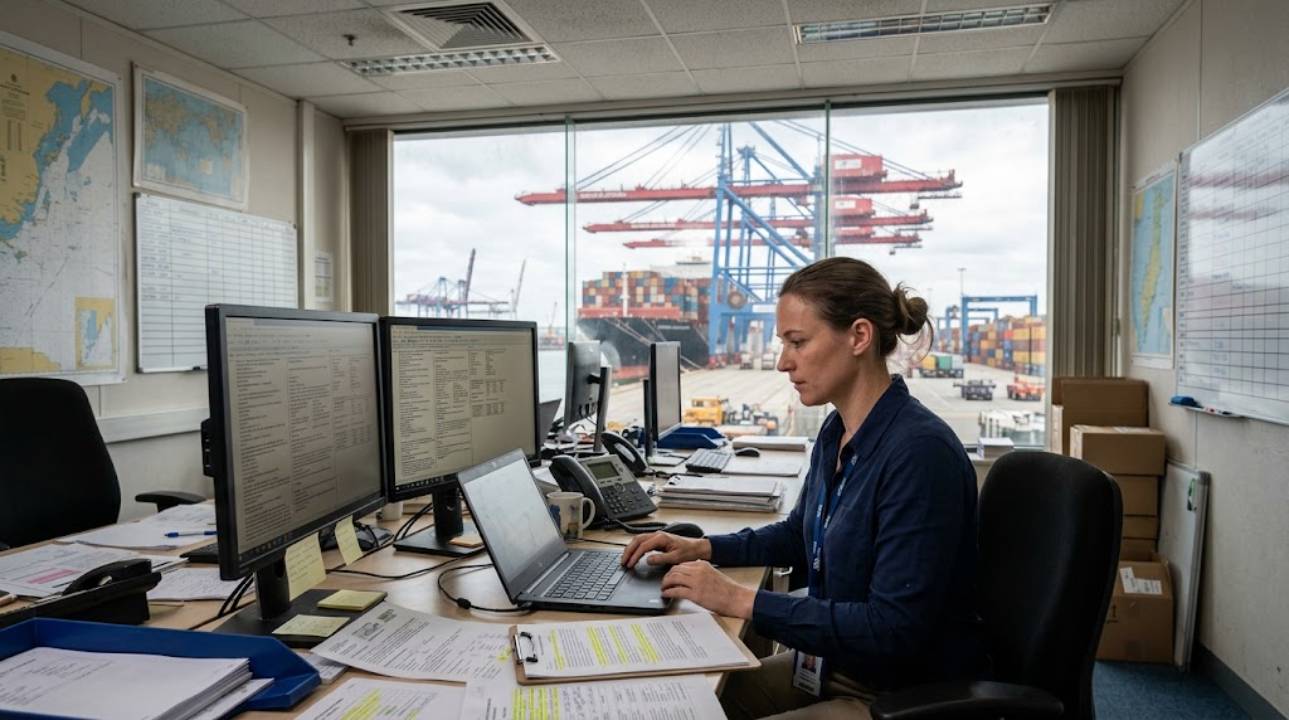
The shipping industry runs on paperwork. A single voyage can involve charter agreements, safety procedures, cargo manifests, inspection reports and crew instructions, and many of these documents must be understood by people who speak different languages. A misunderstood instruction on a vessel is not just an inconvenience; it can become a safety issue. This is why more maritime companies are adopting a CAT editor to handle translation in a controlled and consistent way.
Why maritime language is demanding
Maritime texts are full of precise terms. Ballast, bunkering, demurrage and bill of lading each have a specific meaning, and a translator who chooses a nearly correct word can change the legal or technical sense of a sentence. Crews are often international, so instructions have to be clear for readers who may use English as a second language or who prefer their native language for safety content. Consistency matters just as much as accuracy, because people learn procedures by repetition.
What a CAT editor does in practice
People who ask what is a CAT tool often expect machine translation. In fact, the software is a workspace for human translators. A CAT editor splits documents into segments, shows source and translation side by side, and saves every approved sentence in a memory. When the same or a similar sentence appears in the next manual, the editor suggests the previous translation. Since maritime documents repeat large amounts of standard wording, the reuse can be substantial.
Managing technical terminology
Terminology is the heart of maritime translation. A shared glossary records the approved translation of each technical term, and the editor highlights those terms while the translator works. If someone chooses a different word, a quality check can flag it. Building such a glossary does not have to be a huge project. A guide to the term glossary process explains how to start with a short list of the most important words and expand it over time.
Safety content and clear instructions
Safety notices, emergency procedures and equipment instructions should be written in short sentences and translated carefully. The International Maritime Organization publishes widely used conventions and guidance, and shipping companies often base their internal procedures on them; its website at imo.org is the natural reference point for official terminology. Aligning your glossary with these published terms reduces the risk of misunderstanding between ship and shore.
Handling updates and revisions
Manuals are rarely written once and forgotten. Regulations change, equipment is replaced and procedures are improved. When a document is revised, the editor compares the new version with the memory, so only the changed sentences need attention. This makes it easier to keep every language version up to date at the same time, which avoids the dangerous situation in which one crew follows an older procedure than another.
Working with ports and partners
Shipping involves many parties: agents, surveyors, port authorities, suppliers and clients. Each may send documents in a different format and expect an answer in a certain language. A cloud-based editor lets internal staff and external translators work on the same project, with clear deadlines and statuses. Sensitive contracts and commercial information can be protected through access controls, which is an important point to raise when you talk with clients and partners.
Quality checks before delivery
Before a translated document is released, automatic checks can look for missing numbers, inconsistent units, unusual capitalization and differences between source and target. For a maritime company, numbers and units are particularly sensitive, because a wrong figure for weight, pressure or distance can have real consequences. A second linguist or a technical reviewer should still read critical texts, but the automatic checks remove many simple errors before the review begins.
Training crews and office staff
A tool is only as good as the people who use it. Plan a short session for the office staff who send documents and for the translators who receive them. Show them how to check the glossary, how to read match percentages and how to report a term that seems wrong. Keep a simple channel for feedback, so officers on board can tell the shore team when a translated instruction sounds unnatural. These small conversations improve the memory over time and build trust between ship and shore, which is worth more than any single feature of the software.
Costs and expected savings
Budget is always a question. Start by counting how many words you translate in a year and how many of them are repeated or very similar. Even a conservative estimate of reuse gives a useful figure for the savings. Add the value of faster turnaround, because a manual that is ready a week earlier means a vessel can start following the new procedure sooner. Present these numbers to management in plain language and propose a small pilot with a clear review date.
Some operators outsource the work instead of running it in-house, and that choice needs the same kind of budget discipline. When you compare quotes for technical translation services, an itemised invoice shows exactly what you pay for translation, revision and terminology work, so the savings from reuse are visible line by line. Asking for that breakdown before a project starts prevents surprises later. It also makes it fair to compare two providers on the same documents.
Where to start
Choose one document family, such as crew safety instructions or standard charter clauses. Translate it carefully, build the glossary alongside it and store everything in the memory. When the next revision arrives, measure how much time is saved. Invite masters, officers and shore staff to comment on the terminology, because they know how words are really used on board and in port.
Final thoughts
Maritime companies cannot afford ambiguity, and they cannot afford to translate the same sentence again and again either. A CAT editor offers a way to do both jobs well: it keeps terminology consistent, reuses approved text and gives human translators better support. For a sector where clear communication protects people and cargo, that is a practical and measurable improvement.
Recent Posts
Why Clear Communication Keeps ...
Der Hamburger Hafen zwischen K...
Le transport maritime face au ...
How a Container Ship Works: In...

Notizie Navi Che Muovono Il Co...

Actualites Navires Qui Influen...
Share it.

Links
We use cookies
We use cookies to give you the best online experience, remember your preferences, and understand how the site is used. You can accept all cookies, reject optional ones, or choose which categories to allow.
Privacy PolicyCookie preferences
Choose which cookies we can use. Necessary cookies stay on because the site cannot work without them.
For more details, read our Privacy Policy.